
Models & Frameworks of Digital Technology
SAMR Model & Bloom's Digital Taxonomy
(Week 5)
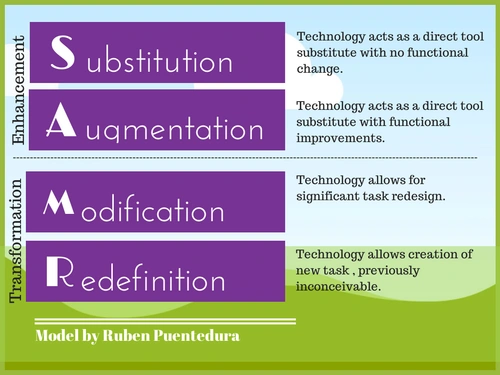
SMAR MODEL OF TECHNOLOGY INTEGRATION
In the classroom to date, I have primarily operated at the Augmentation level of the SAMR Model to enhance tasks and “leverage technology to replace and/or improve existing tools in the learning task” (Hilton p69). This is becauses my access to technolofies is the classroom is limited to computer labs that are shared by over 600 students. However, when technologies are available and learning goals allow, I book computer labs and use augmentation to adapt current unit and task requirements to suit a digital environment. When doing this I am aware that Augmentation requires me to ensure that technology results in a functional improvement “that offers students meaningful technology-based learning experiences” (Hamilton p6). This is necessary because student learning experiences are more important than me, as a teacher, being able to brag that I have progressed to the redefinition stage of the SAMR model.
Unfortunatly, time restraines and resource limitations at this point in my career are preventing me from moving from the Augmentation stage of the SAMR model to modification. Graduating to modification would allow me to transform tasks and learning because I will be able to redesign tasks to maximise technology use and student experiences.
Bibliography:
Hamilton, E. R., Rosenberg, J. M., & Akcaoglu, M. (2016). The Substitution Augmentation Modification Redefinition (SAMR) Model: a Critical Review and Suggestions for its Use. TechTrends : For Leaders in Education & Training., 60(5), 433–441. https://doi.org/10.1007/s11528-016-0091-y
Hilton, J. T. (2016). A case study of the application of SAMR and TPACK for reflection on technology integration into two social studies classrooms. Social Studies, 107(2), 68–73. https://doi.org/10.1080/00377996.2015.1124376
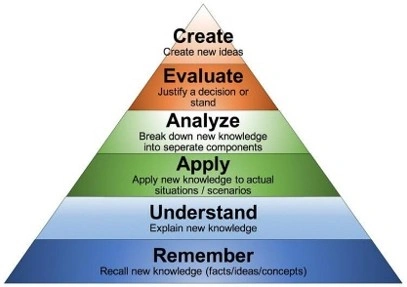
BLOOM'S DIGITAL TAXONOMY
To date in the classroom, I have mainly operated at the remembering and applying level of Blooms Digital Taxonomy when “using technology and digital tools to facilitate learning” (Hogle, n.d.). Students “retrieve relevant knowledge” when completing online quizzes such as Kaboodle “from long term memory (Digital Technologies Hum, n.d.). They also use remembering when they use google searches to locate information relevant to their assessment because they must recall current knowledge to develop search terms and then remember what they have found and apply it the task at hand. Students then apply their knowledge to “carry out or use a procedure” to design, prepare presentations in programmes such as power point and written documents for assessment (Digital Technologies Hub, n.d.). I have ideas that I would like to try such as class blogs which fall under the creating level of the model but technology restraints in my classrooms at this point greatly limits such activities.
Bibliography
Digital Technologies Hub. (n.d.). https://www.digitaltechnologieshub.edu.au/teach-and-assess/assessment-overview/bloom-s-taxonomy/
Hogle, P. Neovation. (n.d.). https://www.neovation.com/learn/27-what-is-blooms-taxonomy-for-digital-learning
Image: https://trans4mind.com/counterpoint/index-study-education/bloom-taxonomy-learning-process.html
Describe a class you took and why you think it is at the level on each of the diagrams.
Class: Yr9 English
Unit: Movie Review
Lesson Outline:
Students have prepared speeches on paper in the classroom. They now have three lessons in the computer lab to create a multimodal presentation that must include a video or audio recording of their speech and visual elements.
Students will begin the lesson with a Kaboodle Quiz that will test their knowledge of literary techniques, figurative language, cinematography and representation.
Students will spend the remainder the lesson preparing a multi-modal presentation that answers the question Should the Australian Movie Red Dog be Included in the Archives of Great Australian Movies? In their speech and multimodal presentation students are required to analyse the use of cinematography and their effect on the audience; and how the movie represents Australian culture, people and landscapes.
The last 15 minutes of the lesson will be spent researching speaking and presentation techniques and completing a set of questions and prompts to assist in the preparation and presentation of their multimodal presentations.
SMAR Model: The set task for this lesson of preparing a multimodal presentation sits at the Modification level of the SAMR Model. This is because traditional assessment tasks that required students to prepare and present an oral presentation have been redesigned. The newly designed task requires students to design, draft, prepare and present a multimodal presentation within a digital environment. PREVIOUS KNOWLEDGE. The task through Modification has also been Redefined because elements can be included in the modified task that are not possible without digital technologies such as video and audio recordings embedded in PowerPoint presentations that are then converted to video. presentations
The opening and closing tasks are where redefinition of tasks is made possible through digital technologies. The Kaboodle quiz at the beginning of the class allows me to test student knowledge with a quiz the students always love because of the competition for finish first with a score of 90% or more. The closing task allows students to complete guided research from multiple sources in multiple formats such as videos, podcasts websites as well as traditional academic materials. Both these redefined tasks ensure engagement because the quiz is visual and fast paces; and the research task allows students some freedom to explore sites and information they personally deem important.
Bloom’s Digital Taxonomy: This lesson sits at both the Application and Creation levels of Bloom’s Digital Taxonomy model. It is at the Application level because students are using prior knowledge to prepare their presentations. The is because the information used to prepare their speeches was not gained through the creation and production of their multimodal presentations, it was gained in the preparation of their speeches in the classroom. Creation is also required by students in the preparation of the video and audio content of their presentation; and the construction of their presentation video.